Pelvic fins and skeleton absent; pectoral fins and girdle absent in some; pectoral fins, when present, at least midlateral in position or higher and skeleton lacking bony connection to skull (posttemporal absent); dorsal and anal fins confluent with caudal fin (caudal fin rayless or lost in some); scales usually absent or, if present, cycloid and embedded; body very elongate (eel-like); gill openings usually narrow; gill region elongate and gills displaced posteriorly; gill rakers absent; pyloric caeca absent; maxilla toothed, bordering mouth; the two pre-maxillae (rarely absent), the vomer (usually), and the ethmoid united into a single bone; branchiostegal rays 6-49; swim bladder present, duct usually present; oviducts absent; opisthotic, orbitosphenoid, mesocoracoid, gular plate, posttemporal, postcleithra, supramaxilla, and extrascapular bones absent; ossified symplectic absent (cartilaginous one present in Synaphobranchidae); hyomandibular united with quadrate; ribs present or absent.
วงศ์ปลาตูหนา
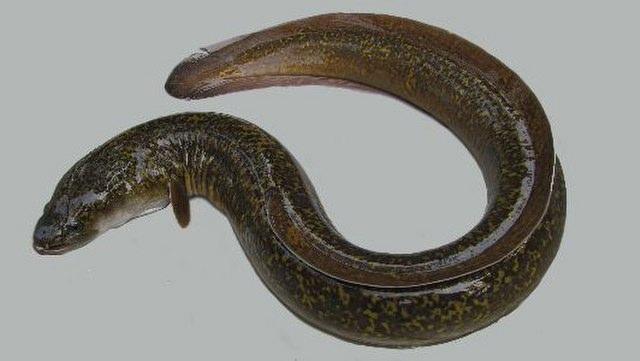
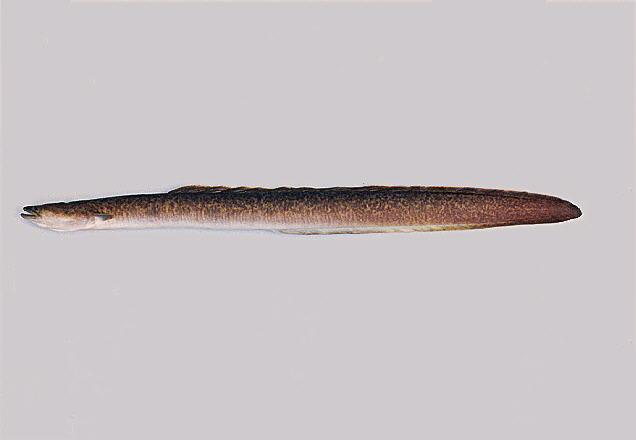
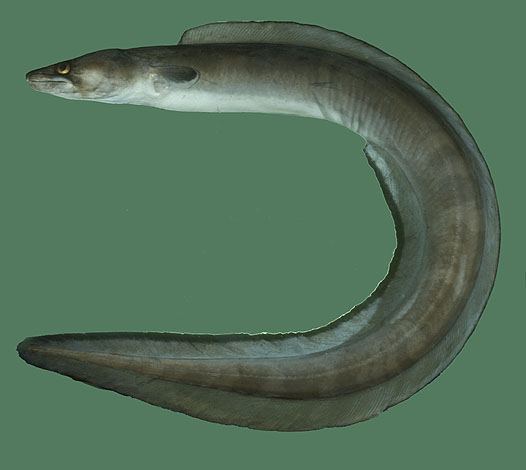
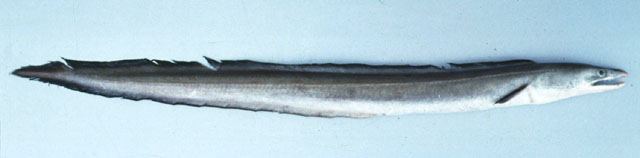
Usually catadromous fishes in tropical and temperate waters, except eastern Pacific and south Atlantic. Eellike body with minute or embedded scales. Well developed pectorals but no pelvic fins; dorsal and caudal fin confluent with anal fin. All species are important food fishes and are sold fresh, smoked, or canned. Important aquaculture species based on captured juveniles (elvers); widely introduced. All spend their juvenile and adult life in freshwater, returning to the ocean to spawn and die. The leptocephalus larvae are marine with sharply pointed tail which distinguishes the family from the elopids. There is some doubt as to the validity of some of the fifteen species currently recognized.
วงศ์ปลาไหลสวน
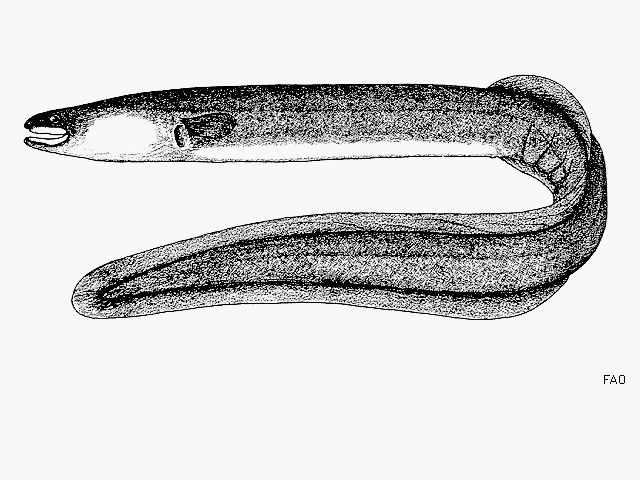
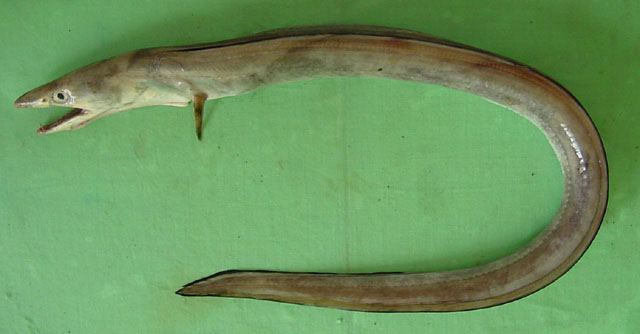
Distribution: Atlantic, Indian and Pacific Oceans. Body without scales; lateral line complete. Usually with pectoral fins. Branchiostegal rays 8-22. Vertebrae 105-225. Conger eels feed on small fishes and crustaceans, primarily at night. Occur mostly in deep or temperate waters and are valued as food fishes. Garden eels occur in colonies in sand where they live individually in burrows from which they protrude to feed on plankton. Mating and spawning apparently takes place without any lengthy migration.
วงศ์ปลายอดจาก
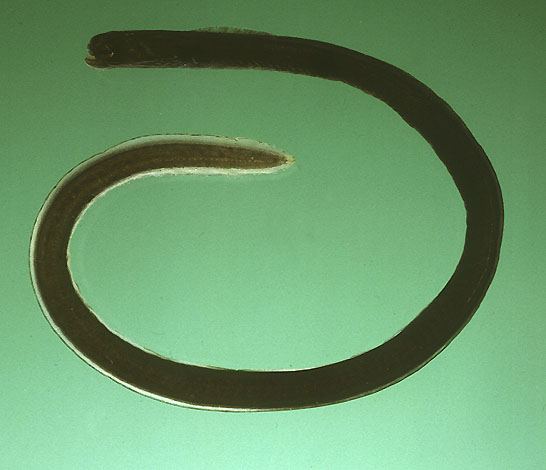
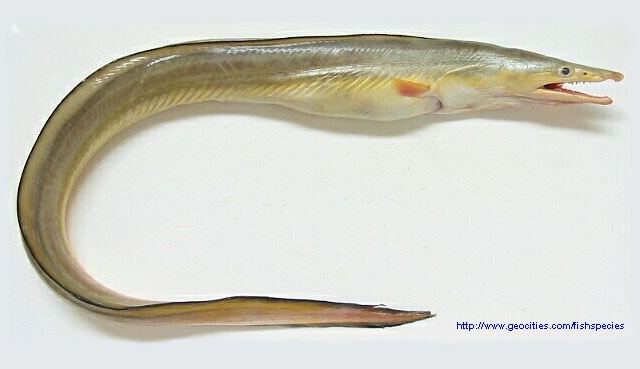
Distribution: Atlantic, Indian and Pacific. Tropical. Well developed teeth, especially on vomer. Pectorals well developed. Large eyes covered with skin. Origin of dorsal fin over or slightly before pectoral base. Conspicuous lateral line. Vertebrae 120-216.
ปลาไหลมอเรย์
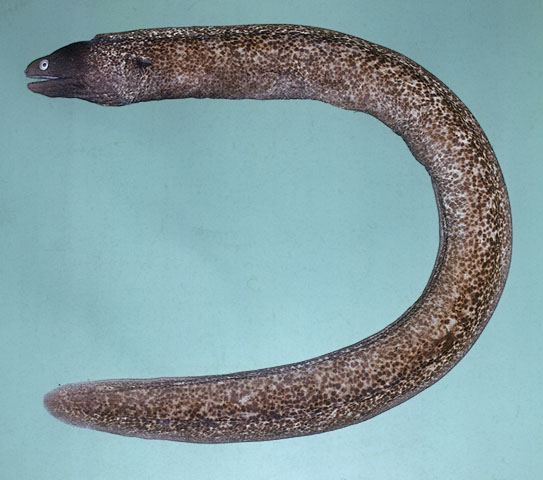
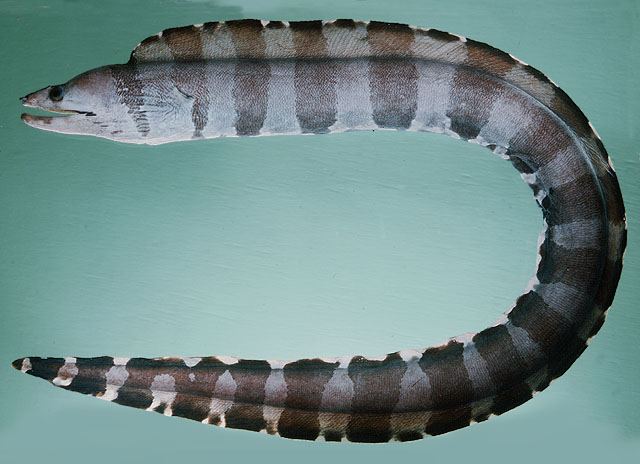
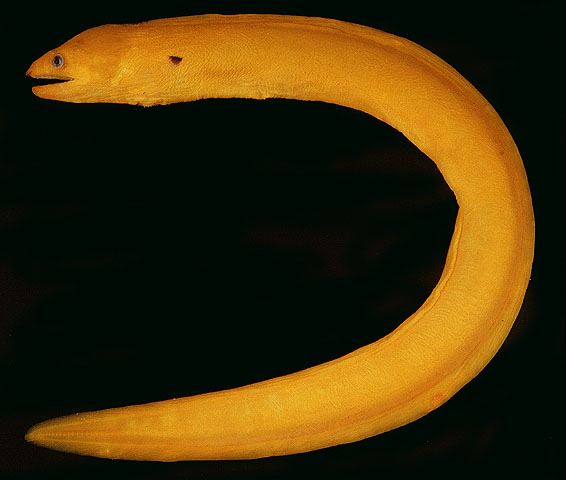
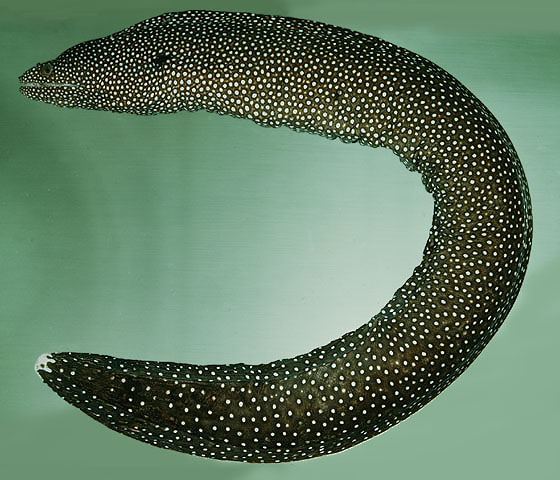
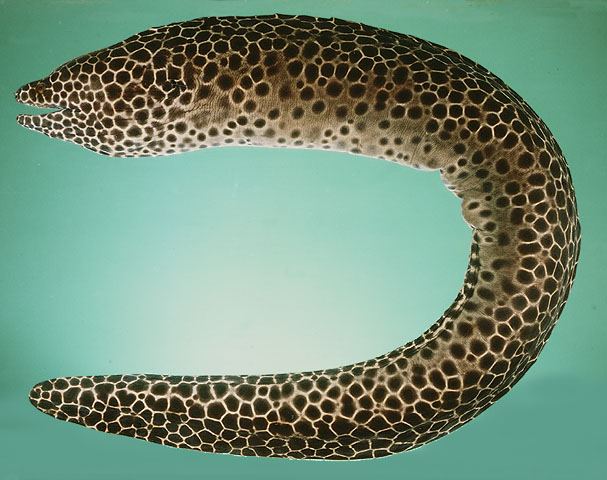
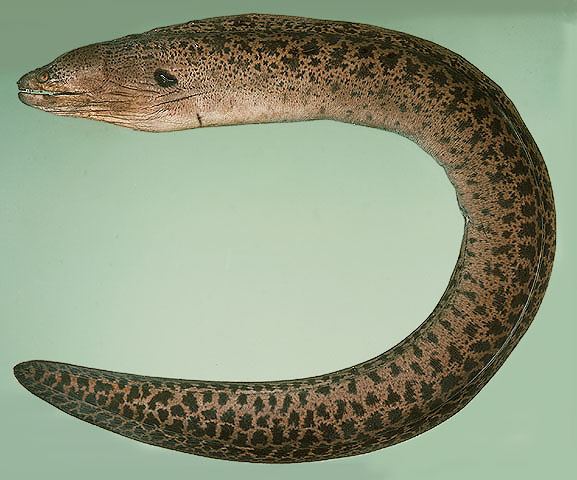
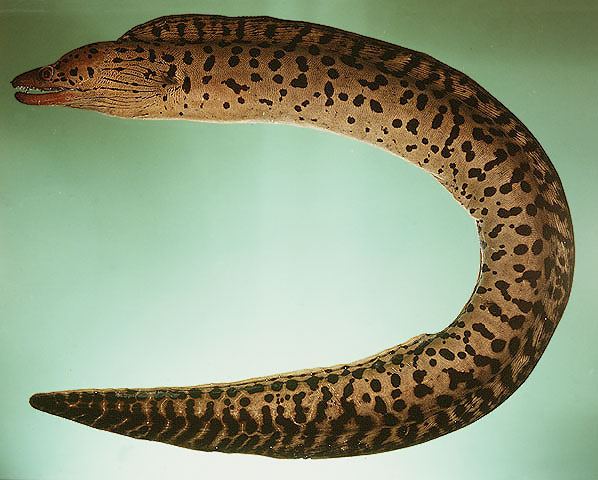
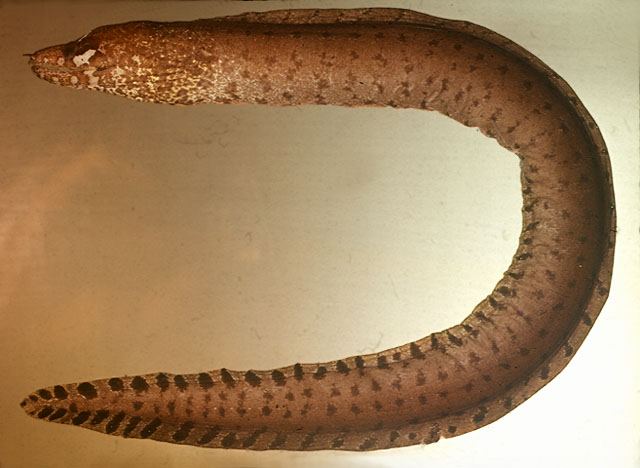
Worldwide in tropical and temperate seas. Diverse group of eels with large mouths with numerous teeth; often with fanglike (canine) teeth. Dorsal fin origin usually before the gill openings; median fins confluent with caudal fin; no pelvic and pectoral fins. Gill openings as small roundish lateral openings. Head with 1-3 lateral line pores; absent on body. Scaleless. Recorded maximum length 3.0 m. Some morays cause ciguatera fish poisoning. A skin toxin was noted in an Indo-Pacific moray eel. Adults benthic, generally in shallow water among rocks and coral heads; many species are more active at night and hide in holes and crevices during the day. Vicious reputation is undeserved, although some species will bite if provoked. Feed mainly on crustaceans, cephalopods and small fishes. Larvae (leptocephali) epipelagic, widespread and abundant. Widely used as food, but a few large species may be ciguatoxic. Generally hardy in captivity.




 )
)
 1
1

 เคยเจอแต่ตัวเป็นๆอย่างดุเลย